
How to Keep a Conversation Going in Another Language
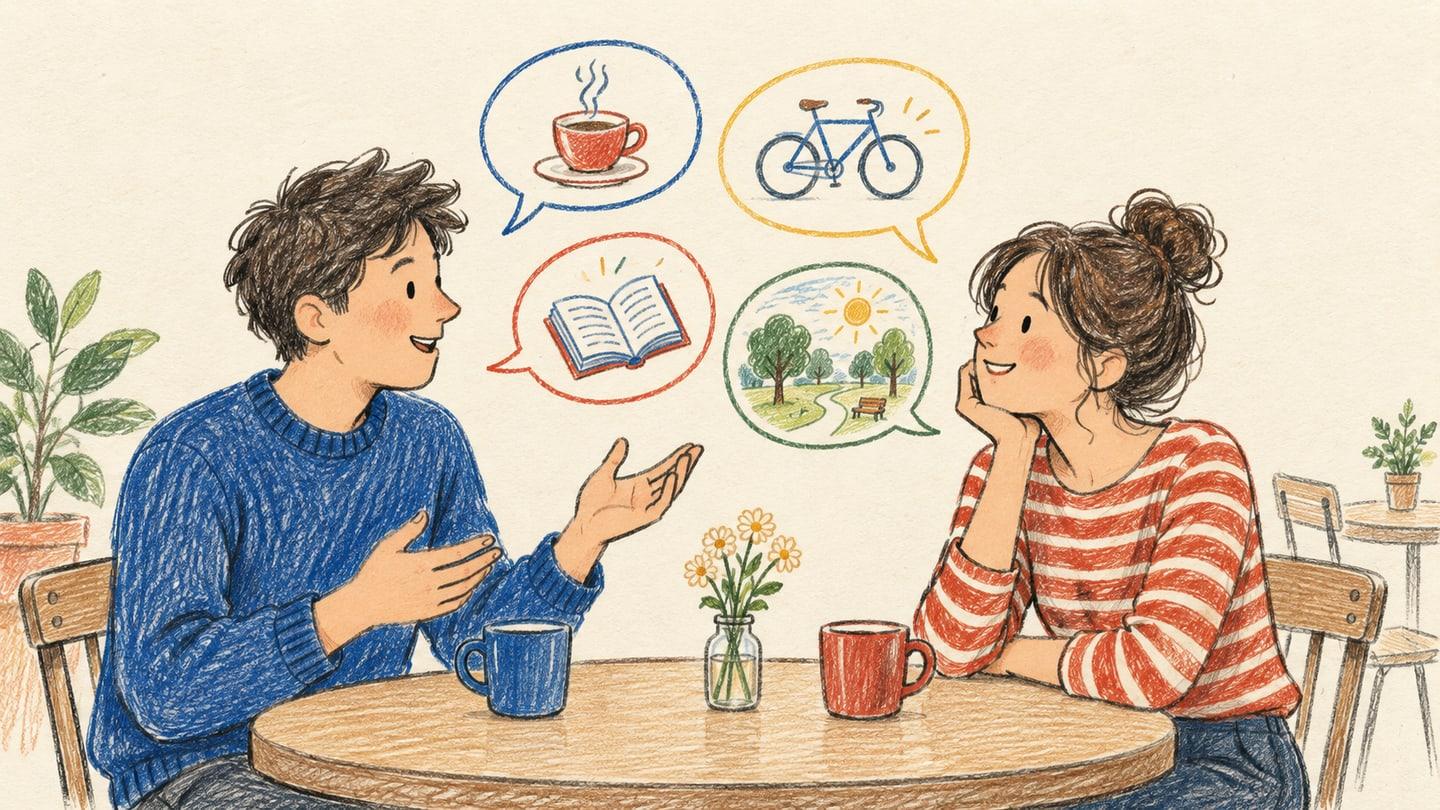
To keep a conversation going in another language, react to what the person said, add a small detail, and ask a connected question. You do not need a clever new topic after every reply.
Give the other person something to use
“Do you like cooking?” “Yes.” That exchange can stop quickly because the answer leaves little to follow. Try “Yes. I make soup on Sundays because I can use it for lunch all week.” Now your partner can ask about the soup, the routine, or your lunch.
A useful reply often has three parts: a reaction, one detail, and a question. This is a practice tool, not a rule for every message. Some replies only need a reaction; others need space for a longer story.
Watch one topic develop
A: I tried making bread yesterday.
B: That sounds fun. I bake sometimes, but I usually make cakes. How did the bread turn out?
A: It tasted good, but it was quite flat.
B: My first cake was flat too. Are you going to try again?
A: Yes, this weekend. I want to use a simpler recipe.
The second speaker stays with bread, adds a related experience, and asks about a next step. Neither person needs advanced vocabulary. A natural next reply might share a simple recipe idea or ask what made the first one difficult.
Avoid turning the chat into an interview
Several questions in a row can leave your partner doing all the work. After “Where do you live?” and “What do you do?”, pause and share something of your own. Keep questions connected to details the person has chosen to mention.
You can also return to an earlier detail: “You mentioned a new job. How is the first week going?” If you miss the meaning, ask for clarification before changing topics.
Practice three follow-ups
- Your partner says, “I started cycling last month.”
- Your partner says, “I’m watching a series about a small town.”
- Your partner says, “I’m tired, so I’m staying home tonight.”
Possible replies: 1. “Nice! I ride at weekends. Do you cycle for travel or for fun?” 2. “I like small-town stories. Is it funny or serious?” 3. “I understand. I had a long day too. Enjoy your quiet evening!” The third reply closes kindly instead of forcing another question.
Let an exchange end naturally
A good conversation does not have to continue forever. “It was nice talking. I need to go now” is a useful ending to learn in your language. You can mention a topic to revisit next time without promising a fixed schedule.
Pick a topic from our conversation starters or hobby guide. Try five connected turns in the Polyglossa text demo, then check whether you both asked and shared.