
How to Ask for Clarification in a New Language
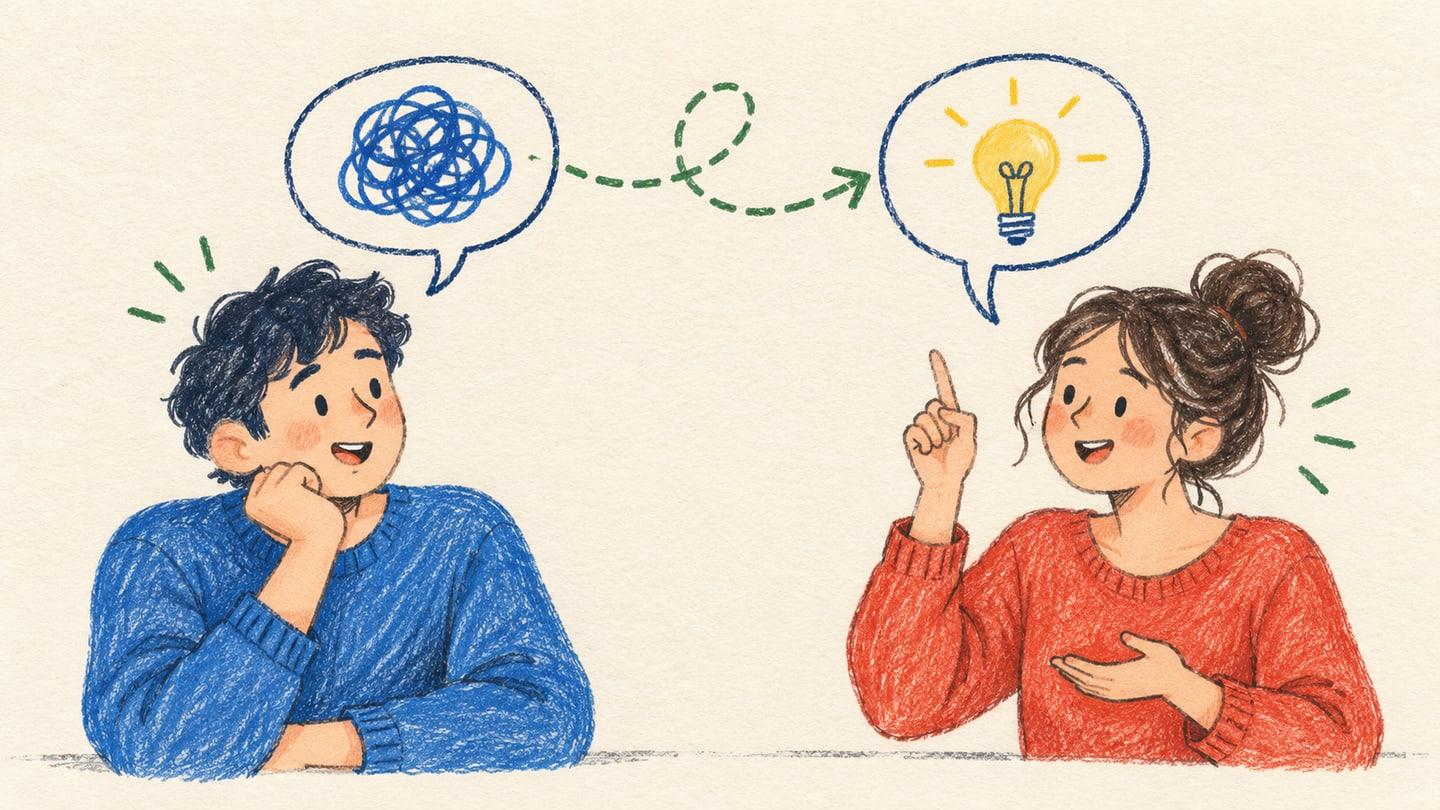
You understand the beginning of a reply, miss one expression, and suddenly the rest is hard to follow. Before you nod along or change the subject, try asking a smaller question. You can practice keeping a conversation going even when you do not understand every word.
First, work out what you missed
Not hearing a word, not knowing a word, and not understanding someone’s intention are different problems. Repeating the same sentence may help with the first one. For the others, you might need a definition, an example, or a chance to check your interpretation.
The British Council’s guide to international communication encourages learners to ask questions and check understanding. Treat that as part of participating in the conversation. You can make a clarification request brief and specific, then return to what you were discussing.
The sample phrases here are in English. If you are practicing another language, learn a few equivalents with a teacher or a reliable learning resource. Check which forms suit the person you are talking to; the same wording will not have the same level of politeness in every language.
When you did not catch the words
In a spoken conversation, ask for the piece you missed. “The last word” or “the time” tells your partner where to help, so they do not need to repeat a long explanation from the beginning.
- “I missed the last part. Could you repeat it?”
- “What time did you say?”
- “Could you say the name a little more slowly?”
In text chat, you already have the words in front of you. Quote the confusing part and ask about it directly. “What does ‘a quiet night in’ mean here?” gives your partner more to work with than “I don’t understand.”
When you recognize the words but not the meaning
A familiar word can have an unfamiliar use. Try asking for different wording or a concrete example. You can also say what you already understand so the explanation starts in the right place.
- “I understand the first sentence. Could you explain the next one more simply?”
- “Could you give me an example of that?”
- “Does that expression mean you are staying at home?”
If an explanation introduces several more unfamiliar words, narrow the request again: “Could you explain just this expression?” You can look up a word as well. Staying in the conversation does not require refusing every translation or dictionary check.
When you want to check the plan
Sometimes you understand each sentence but are unsure what the two of you have agreed to do. Restate the important detail and give your partner a chance to correct it.
- “So we are meeting outside the station, right?”
- “Do you mean this Friday or next Friday?”
- “Have I got this right: I bring the food and you bring the drinks?”
Use this when practicing everyday situations such as arranging a visit or finding a meeting place. A specific question about the date, location, or next step is easier to answer than a general request to explain everything again.
See how a short clarification changes the exchange
Here is a sample conversation about weekend plans:
Partner: I think I’ll have a quiet night in.
You: Does “a night in” mean you are staying at home?
Partner: Yes. I’ll probably cook something and watch a film.
You: Got it. What kind of film are you in the mood for?
The clarification is only one turn. Once you understand, acknowledge the answer and ask about something in it. You have learned an expression and continued the topic without turning the whole exchange into a vocabulary lesson.
Make your own small phrase kit
Choose three phrases to start with: one for repetition, one for simpler wording, and one for checking meaning. Keep them somewhere easy to find. Practice changing the specific detail, such as the word, time, or place you are asking about, rather than memorizing a single fixed conversation.
For a Polyglossa text chat, open with a topic from our conversation starters. If an expression is unfamiliar, ask about that expression before sending your next answer. If everything is clear, practice summarizing one detail and asking whether you understood it.
Text practice gives you time to choose your wording. For listening practice, try your repetition phrases during a spoken exchange with a teacher or language partner too. Polyglossa currently uses text chat, so it does not check how well you heard or pronounced a phrase. AI explanations can also be mistaken; check a doubtful meaning with a reliable resource.
End with one thing you now understand
After the conversation, write down the expression, what it meant in that situation, and your own example. You can use the short template in our language journal guide. Next time, try using the expression or the clarification phrase again.
A useful goal for today is simple: notice one moment of uncertainty and ask a question that resolves it. That is a conversation skill you can practice at any level.
When you want feedback on your own wording, use these requests for focused language corrections.