
How to Ask for Language Corrections That You Can Actually Use
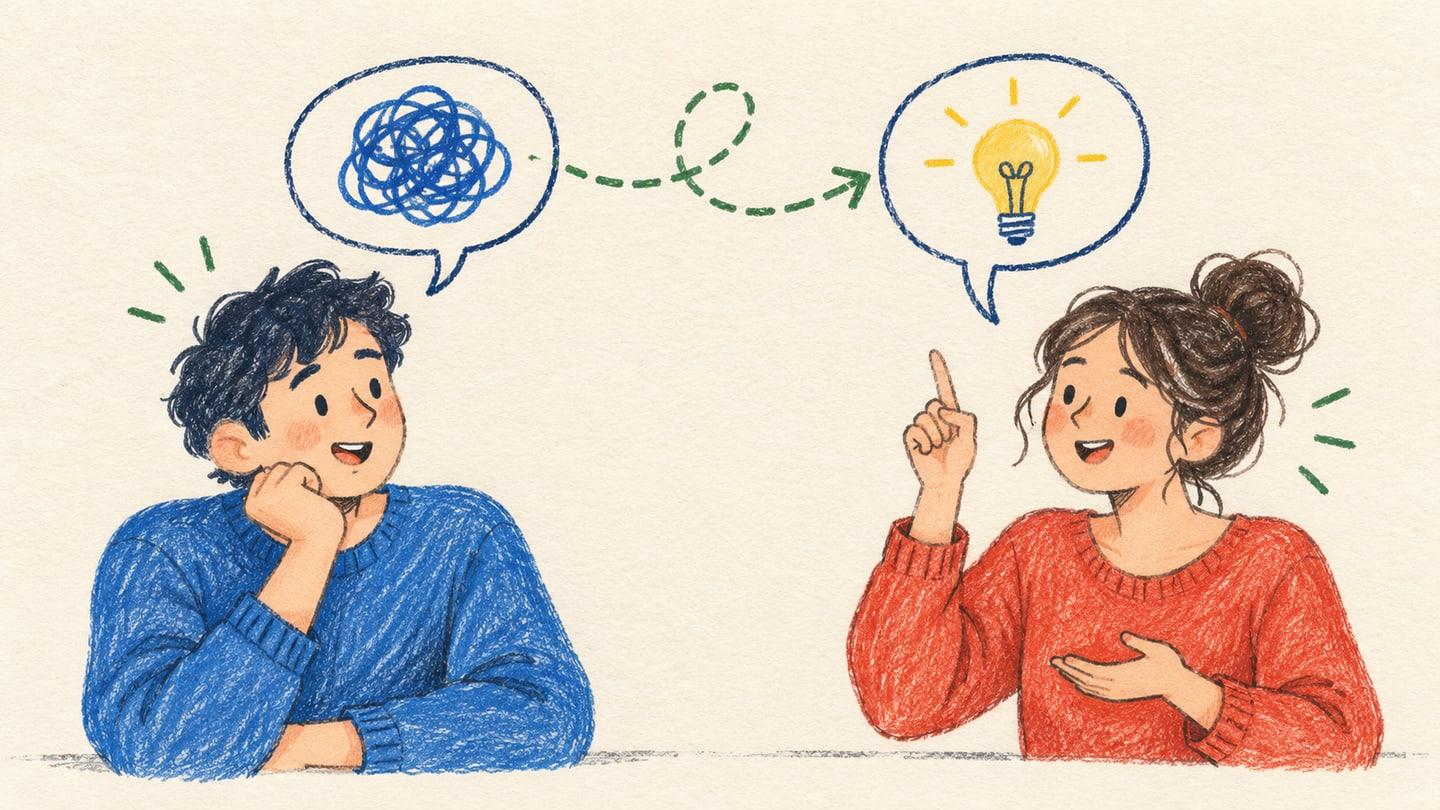
Useful language corrections are small enough to understand and use again. Tell your partner what you want checked, ask them to explain one change, and write a new sentence with it. You do not need every message rewritten.
Choose what you want feedback on
Are you checking meaning, grammar, or tone? “Is this clear?” and “Does this sound suitable for a client?” are different questions. A partner can give more relevant help when the goal is clear.
During a conversation, you may prefer to keep going and review mistakes afterward. Agree on that with a human partner. With AI, ask for limited feedback, but check the result rather than assuming it is expert advice.
Five requests you can copy
- Meaning: “Tell me what you understood from this message.” A useful reply restates your point so you can compare it with your intention.
- One pattern: “Please check only my past-tense verbs.” The answer should leave unrelated wording alone.
- Priority: “Which mistake makes this hardest to understand?” This helps you choose a first repair.
- Tone: “Is this too direct for a new coworker? Explain why.” Include the situation.
- Minimal change: “Correct one error and keep the rest of my words.” Ask for the reason too.
Separate an error from a style choice
Consider “She go to work by train.” Changing “go” to “goes” fixes subject–verb agreement in standard English. Now consider “I like this book.” Changing it to “I find this book enjoyable” is a style choice, not a necessary correction.
Ask: “Was my original wrong, or is your version another option?” A longer sentence is not automatically better. Keep language that matches the setting and says what you mean.
Turn a correction into practice
Use a three-line log: my sentence, the correction, and a new example. For the first sentence above, your new example might be “My brother goes to college by bus.” Then try a different verb: “My friend works at a café.”
Your exercise: correct “He cook dinner on Sundays,” then write a new sentence about a different person. Possible answer: “He cooks dinner on Sundays. My sister reads before bed.” Both statements use the present simple for a routine.
Keep the review manageable
Save one or two changes in your language journal. If the explanation remains unclear, ask a teacher or consult a grammar reference before practicing it repeatedly.
Try the draft–hint–revise routine in a short penpal chat. The goal is a change you can explain and reuse.