
How to Apologize and Repair a Misunderstanding in Another Language
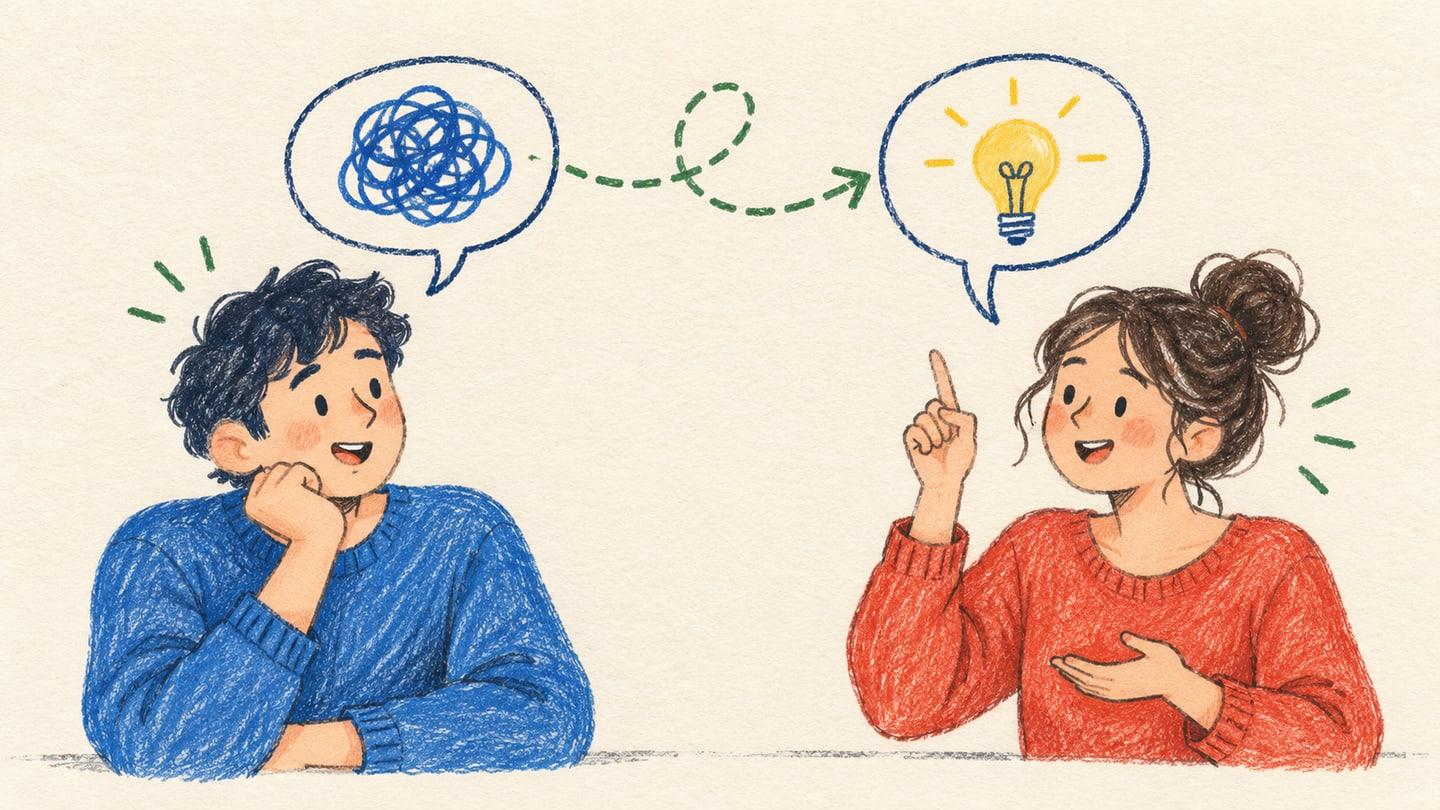
When a message causes confusion, acknowledge the problem, say your meaning more clearly, and check the important detail. A short repair often works better than repeating the same words more loudly or adding a long explanation.
Decide what needs repairing
A small language error, an unclear intention, and hurtful behavior are different problems. If you wrote the wrong time, correct the time. If your message sounded demanding, explain the request politely. If you upset someone, acknowledge that impact as well as your intention.
Do not assume “I’m still learning” settles every problem. It can explain a wording mistake, but you may also need to take responsibility for what happened.
Repair a scheduling mix-up
Original: Let’s meet next Friday.
Problem: You and your partner understood different dates.
Repair: Sorry, I wasn’t clear. I mean Friday the 20th at 6 p.m. Does that work for you?
The repair replaces a vague phrase with a date and time, then checks agreement. In your own message, use a real calendar date and include the time zone when it matters. Learn how dates are normally written in the language you are using.
Soften an accidentally blunt message
Original: Give me your notes today.
Repair: Sorry, that sounded demanding. Could you share your notes today if you have time? Tomorrow would also work.
The second version changes the request itself. It gives the other person room to answer. The best wording depends on the relationship and context, so check sensitive messages with a proficient speaker who understands the situation.
Use a simple repair structure
- Acknowledge: “Sorry, that was unclear” or “I used the wrong word.”
- Restate: “I meant …” followed by a shorter sentence.
- Check: “Is the new time okay?” or “Have I explained it clearly?”
Keep the check specific when possible. “Do you understand?” can sound like you are placing the problem on the listener. A question about the detail is often easier to answer.
Rewrite three messages
- You wrote “Tuesday,” but meant Thursday.
- You called a meal “strange,” but meant it was new to you.
- You sent the wrong address for a meeting.
Possible repairs: 1. “Sorry, I wrote the wrong day. I mean Thursday. Are you free then?” 2. “Sorry, I chose the wrong word. I meant I haven’t tried this kind of food before.” 3. “Sorry, that address was wrong. Here is the correct one. Can you confirm you have it?”
Translate one repair into your target language and try a fictional exchange in the Polyglossa text demo. See our Ukrainian apology examples, learn to request focused corrections, or practice clarifying someone else’s message.