
Swedish Small Talk at Fika: Questions and Natural Follow-Ups
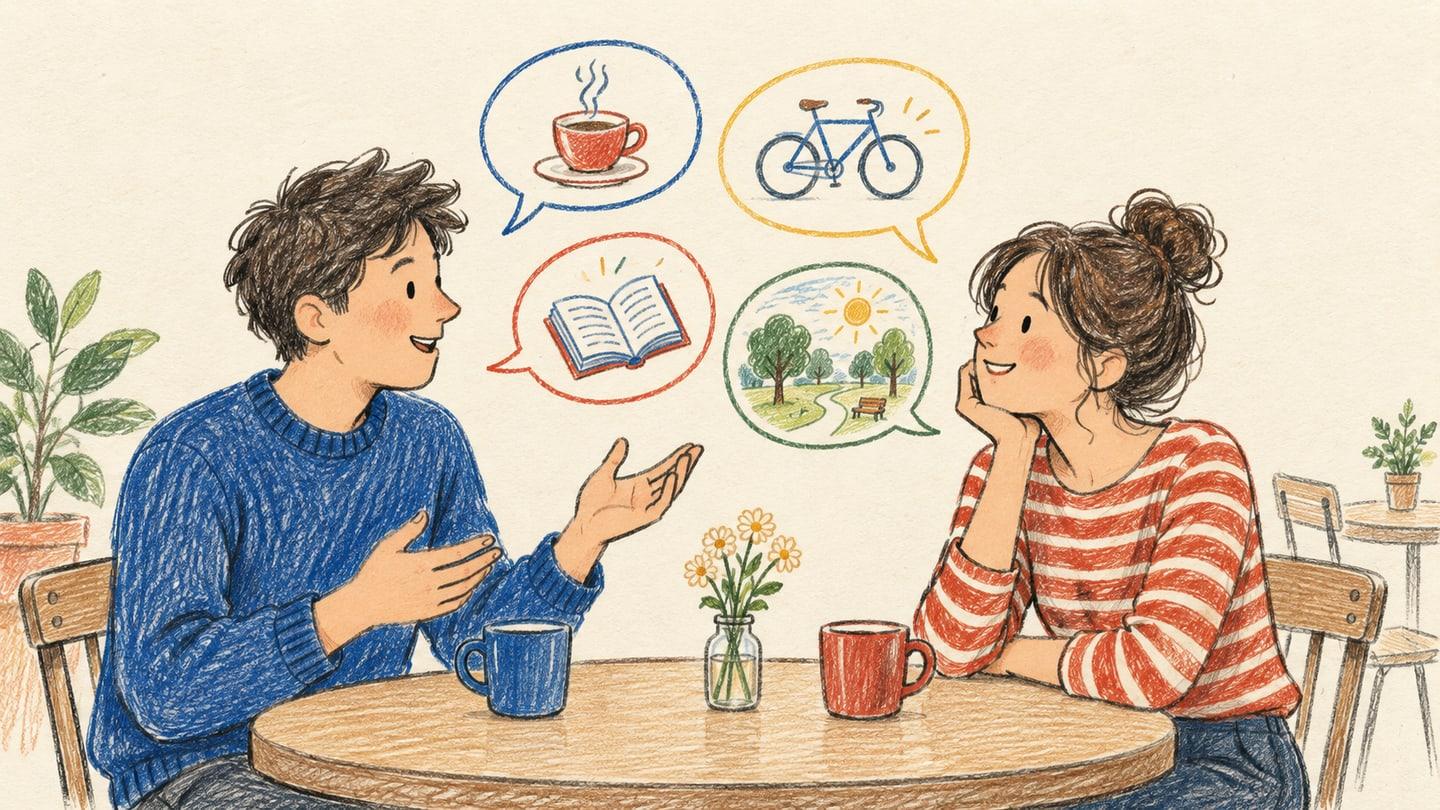
For Swedish small talk at fika, start with a simple question about the day, react to the answer, and ask one related follow-up. You do not need an unusual topic. A short exchange about coffee, a hobby, or the weekend is enough.
Understand the setting
Fika is a social break often involving coffee and something to eat. Visit Sweden's introduction to fika describes that social side. The exact routine depends on the people and place; not every break has the same food, timing, or expectations.
If people are already sitting together, you can ask “Får jag slå mig ner?”—“May I sit down?” To suggest a break, try “Ska vi ta en fika?”—“Shall we have a fika?”
Ask about the day
A: Hur är läget?
B: Bra, tack. Jag har haft en lugn morgon.
A: Vad skönt! Har du mycket att göra i eftermiddag?A asks how things are. B says they have had a quiet morning. A responds “How nice!” and asks whether they have much to do this afternoon.
Hur är läget? is an informal opening. You can also use “Hur är det?”—“How are things?” Give your partner time to answer before moving to the next question.
Follow an interest or a plan
- Vad gillar du att göra på fritiden? — What do you like doing in your free time?
- Jag gillar att läsa. — I like reading.
- Vad läser du just nu? — What are you reading right now?
- Vad ska du göra i helgen? — What are you going to do this weekend?
- Jag ska träffa en vän. — I'm going to meet a friend.
Stay with a detail the person has shared. If they mention reading, asking about the book makes a more connected reply than suddenly asking about their job.
Try a missing reply
Your partner says “Jag ska gå på bio i helgen”—“I'm going to the cinema this weekend.” Write a brief reaction and a follow-up about the film.
Possible answer: “Vad kul! Vilken film ska du se?”—“How fun! Which film are you going to see?” Now imagine they name a comedy and ask what kinds of films you enjoy.
Leave politely
“Tack för fikat. Jag måste gå nu. Vi ses!” means “Thanks for the fika. I have to go now. See you!”
Continue one topic in Swedish text practice. If you need help building an exchange, adapt the ideas in our conversation starters.