
AI Chat vs Language Exchange: Which Practice Fits Your Goal?
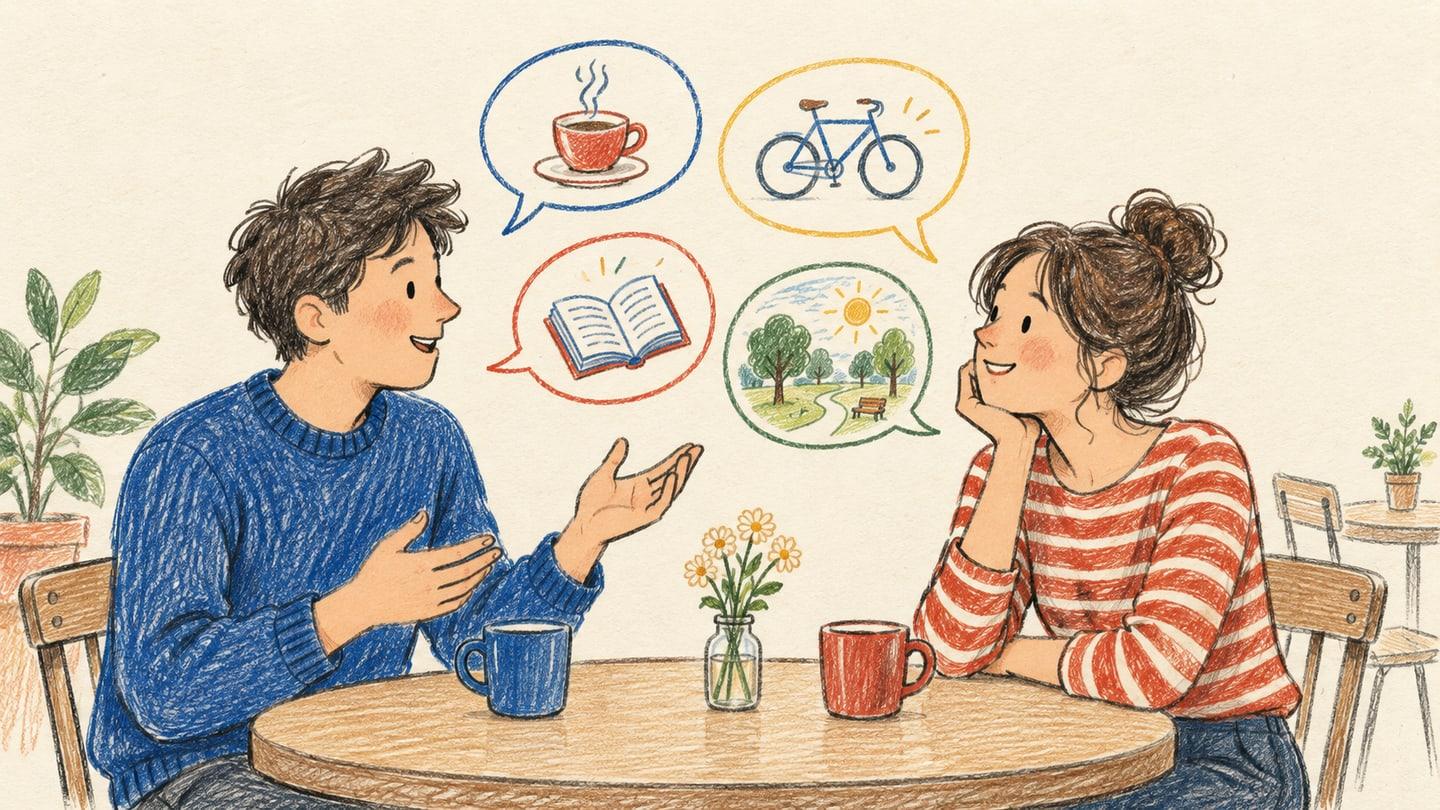
AI text chat fits short writing practice that you can start on your own. A human language exchange fits two people helping each other use their learning languages. Choose by the task you need to practice, and combine them if both are useful.
Compare the same kinds of practice
A text exchange with a person and a voice call with a person are different activities. Likewise, an AI text chat is not a speaking lesson. First decide whether your goal is writing messages, listening and speaking, or getting expert feedback.
| Question | AI text chat | Human exchange |
|---|---|---|
| When can I practice? | No meeting to arrange, though service limits may apply. | Live sessions need shared time; messages can be asynchronous. |
| Do I help someone in return? | No reciprocal teaching time. | Usually both people need time for their learning language. |
| How reliable are corrections? | Suggestions can be wrong or unnecessary. | Quality depends on the partner; fluent speakers are not always teachers. |
| What kind of interaction is it? | Generated replies from a system or character. | A person's own experiences, preferences, and reactions. |
Choose a routine that matches your goal
- Writing short messages: use two 10-minute AI chats during the week. Later, send a short message to a human partner if you have one.
- Preparing for a live conversation: write a few topic notes, rehearse questions in text, then have a human voice or in-person exchange.
- Working on a repeated error: collect three examples from your messages and bring them to a qualified teacher. Use the corrected pattern in your next chat.
These are sample routines, not required amounts of practice. If pronunciation or exam feedback is your main goal, a teacher with relevant experience may be a better fit than either casual option.
Agree on expectations with a partner
Before a human exchange, ask how long you will meet, how you will divide the languages, and whether corrections should interrupt the conversation or wait until the end. For a 30-minute session, you might give each language 15 minutes.
Prepare a topic you can discuss both ways. Avoid turning the exchange into a free lesson where only one person gets practice.
Try the same task in two settings
Your task: suggest a weekend activity, explain why, and agree on a time. A possible opening is “Would you like to visit the market on Saturday? I want to try the food stalls. Does ten o'clock work?”
First rehearse in text. Then use the task in a human exchange, if available. Notice where you needed help in each setting; do not assume a polished written answer means you can say it easily.
Read what to expect from an AI penpal, then use the text demo to prepare one question. Keep a few conversation starters ready for your partner too.
If you choose a human partner, prepare with our first language exchange agenda.