
How to Practice Grammar Through Short Conversations
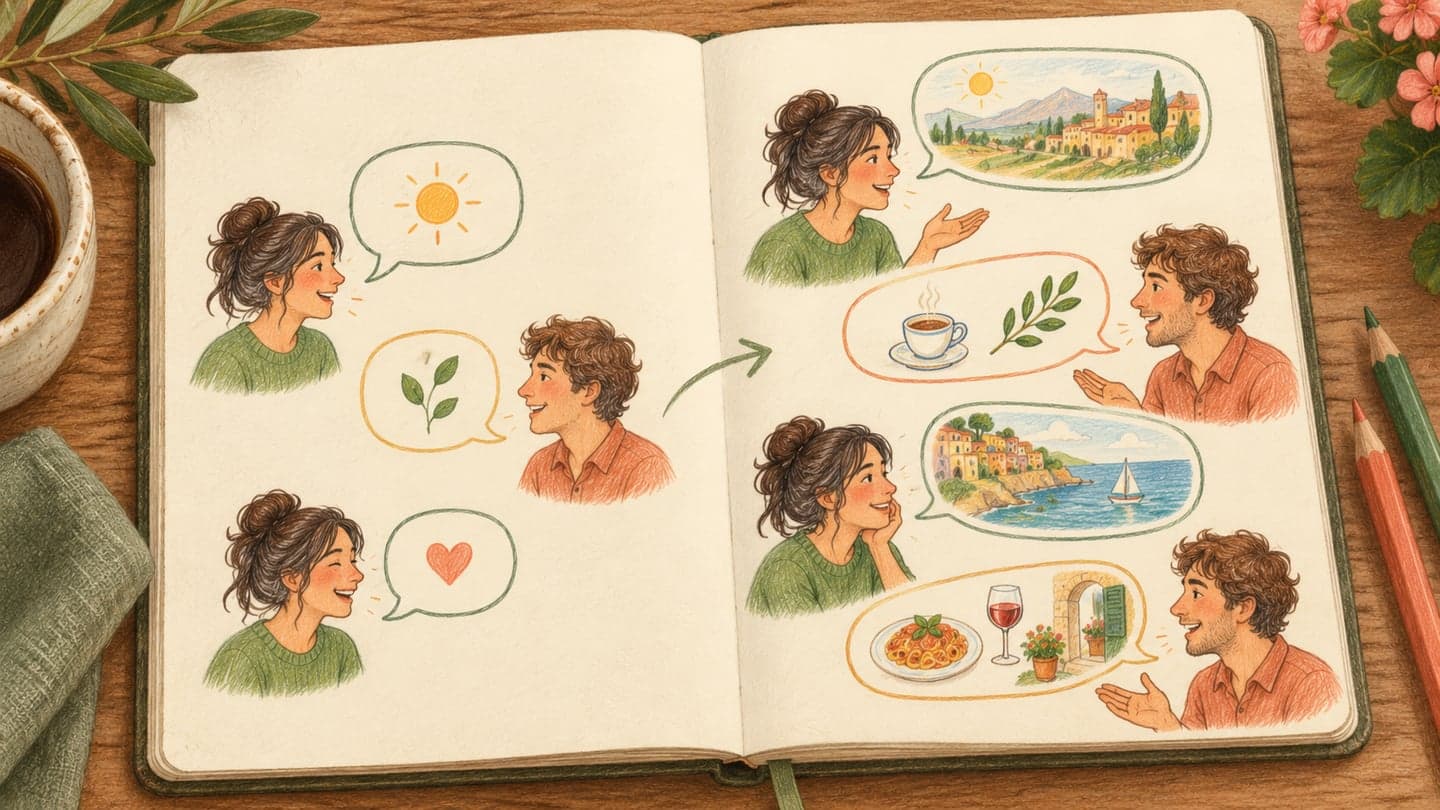
To practice grammar in conversation, choose one thing you want to do: tell a story, make a plan, or compare two choices. Use one grammar pattern to do that job, then answer a follow-up you have not prepared.
Choose a purpose before a grammar rule
A worksheet tells you which form to use. A conversation asks you to choose it while thinking about meaning. Give yourself a small task that makes the pattern useful:
- Past events: explain what you did last weekend.
- Future plans: arrange a visit with a friend.
- Comparisons: choose between two places to eat.
Work on one of these at a time. If your goal is past questions, do not stop the exchange to review every article or preposition.
Follow a short example
This original English exchange practices questions with “did” and answers about completed actions:
A: What did you cook yesterday?
B: I made vegetable soup.
A: Where did you buy the vegetables?
B: I bought them at the market.
A: Did you make enough for today?
B: Yes, I saved some for lunch.
After “did,” use the base form here: “Did you buy?” rather than “Did you bought?” See the British Council's guide to question forms for the pattern and other kinds of questions.
Add a question you did not rehearse
Change the topic to your actual weekend. Write two answers, then ask someone to choose a follow-up. If you are alone, pick one: “Who went with you?” “What surprised you?” or “What did you do afterward?”
You can also ask an AI penpal about yesterday in the Polyglossa text demo. Treat its language feedback as a suggestion to check, especially if it conflicts with your course.
Fix one recurring issue
Try correcting this question before reading the answer: “Where did you went after lunch?”
Answer: “Where did you go after lunch?” The question already marks the past with “did,” so “went” changes to “go.” Now make a different question, such as “What did you eat after work?”
Save the corrected pattern and one new example. A complete rewrite of every message can hide the single change you need to notice.
Repeat the task with different details
Tomorrow, talk about a different meal, journey, or visit. Check whether you can form a fresh question without copying today's model. If not, keep the model nearby for another attempt.
Fit the exercise into a short study routine, or choose a task from our everyday practice prompts. The useful result is a message you can build yourself.
For a language-specific exercise, try German word order or a weekend recap in Spanish.