
Passive vs Active Vocabulary: How to Use Words You Recognize
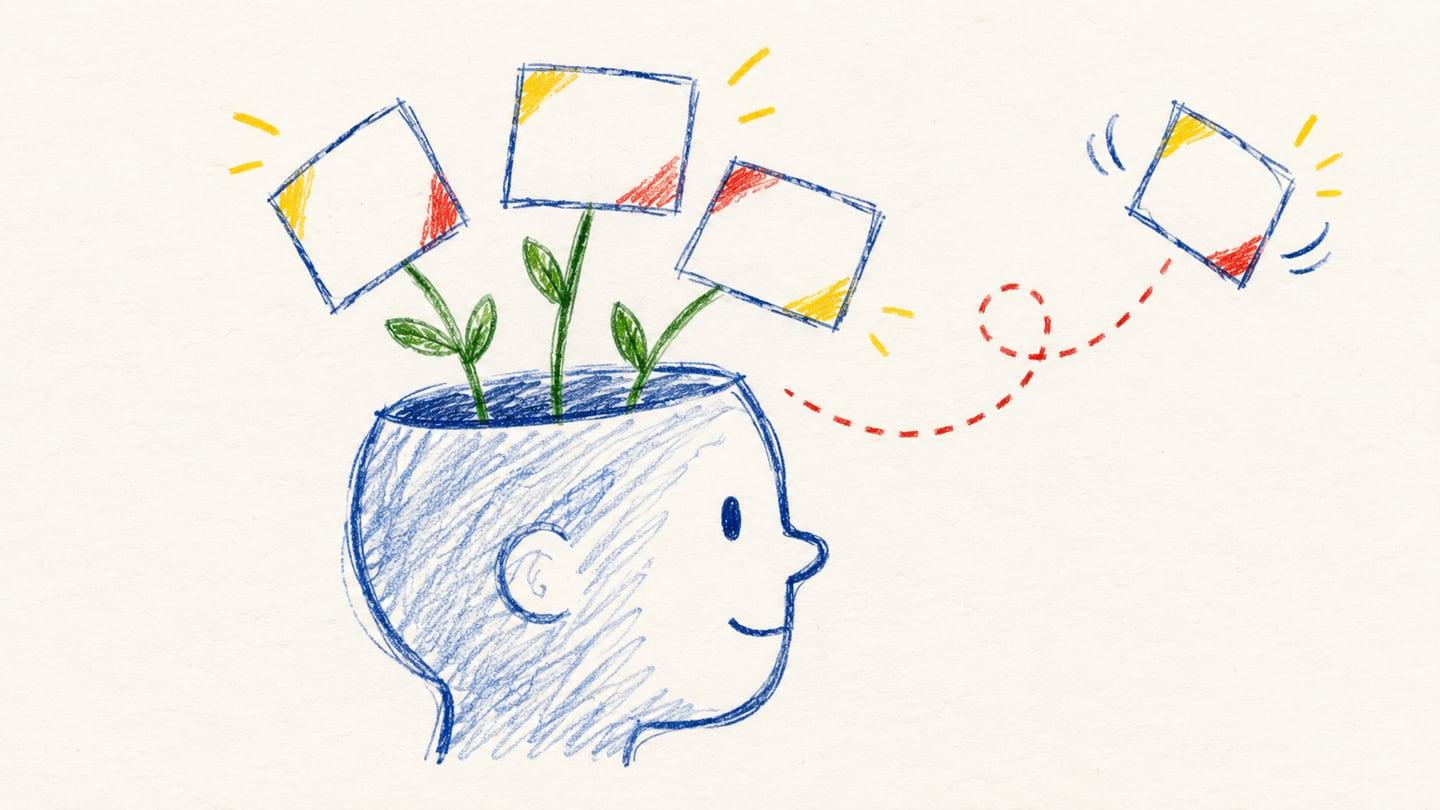
Passive vocabulary is language you understand when you see or hear it. Active vocabulary is language you can use yourself. To practice moving between the two, choose a few familiar words and use them in your own answers, questions, and short exchanges.
Recognizing a word is a different task from using it
You might understand “crowded” in a story about a train. Later, when someone asks about your journey, you say only “It was bad.” The word is familiar, but it did not come to mind when you needed it.
That gives you a useful practice goal: describe your own journey with “crowded.” You do not need to start another long vocabulary list.
Choose five words you could use this week
Look at a recent lesson or short text. Pick words connected to your life. For an English learner, a set might be crowded, nearby, prefer, borrow, and decide. Check any uncertain meaning in a learner's dictionary before you practice.
Attach each word to a situation: a crowded bus, a nearby shop, a drink you prefer, a book you want to borrow, or a plan you need to decide on. A useful situation gives you something real to say.
Make an answer, a question, and a new use
Here is an original example with “prefer”:
- Answer: I prefer walking to work because the bus is crowded.
- Question: Do you prefer tea or coffee?
- New situation: I prefer studying in the morning.
Notice the surrounding words too. “Prefer walking” is a phrase you can adapt. Our guide to learning vocabulary in phrases explains how to keep those useful combinations.
Try a short exchange without the list
Cover your notes. Write a message about your neighborhood using two of your words. Then answer this follow-up: “What would you change about it?” Do not force all five words into one reply.
Possible message: There is a café nearby, but it gets crowded at lunchtime. I prefer going in the morning.
Possible follow-up: I would add more outdoor seats. Sometimes I cannot find a table.
The follow-up does not reuse every word. Its job is to keep the meaning moving. If you needed a hint, mark that word for another attempt rather than counting it as mastered.
Check what you can use later
The next day, describe a different place without looking at yesterday's message. Can you use one of the words in a fresh sentence? For a separate guide to remembering words over time, see vocabulary review and memory.
Ready for a reply you did not write yourself? Use two chosen words in a message to an AI penpal, then answer the question you receive.